Our Favourite Foot and Leg Stretches

We all love a good stretch! It is a natural and instinctive activity for most animals – where do you think the downward dog yoga pose comes from? Increased activity, certain footwear and even our posture can cause our muscles to become overworked with time. Stretching is a great way to reduce muscle tension and improve range of motion. It can be included into your daily routine or following exercise. It is important to stretch correctly by gently holding each stretch and avoiding bouncing during the activity.

Here are my top 4 stretches for your feet and legs:
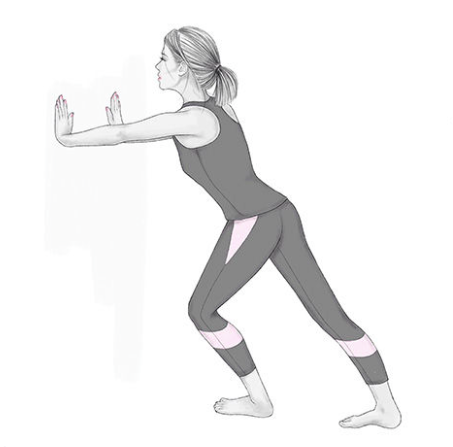
 

calf-leg-foot-stretch

Calf Stretch

Position yourself half a meter away from a wall with your feet shoulder width apart. Step your right foot backwards and place your hands against the wall. Keep your hips square, both feet straight and ensure your heel stays connected to the floor. Bend your front leg and fully extend your back leg. Push through your back foot so that you feel a nice stretch down your back leg. Hold for 20-30 seconds and repeat on the left side.
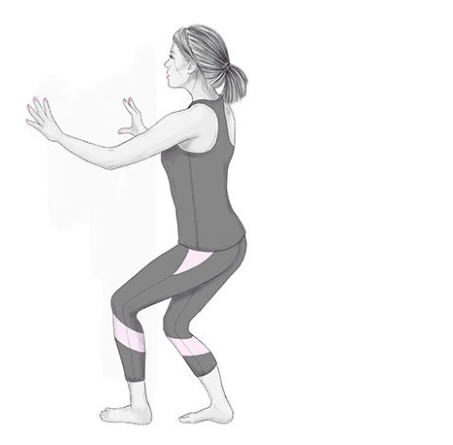
 

achilles-calf-leg-foot-stretch

Achilles Stretch

As with the calf stretch position yourself away from the wall with your feet shoulder width apart. Place your hands against the wall and step your right foot backwards, not as far back as the previous stretch. Keep your hips square, both feet straight and ensure both heels stay connected to the floor. Bend BOTH knees, checking to see that your kneecaps are positioned directly above each foot. Push through your back foot so that you feel a stretch towards the lower part of your back leg (Achilles tendon). Hold for 20-30 seconds and repeat on the left side.
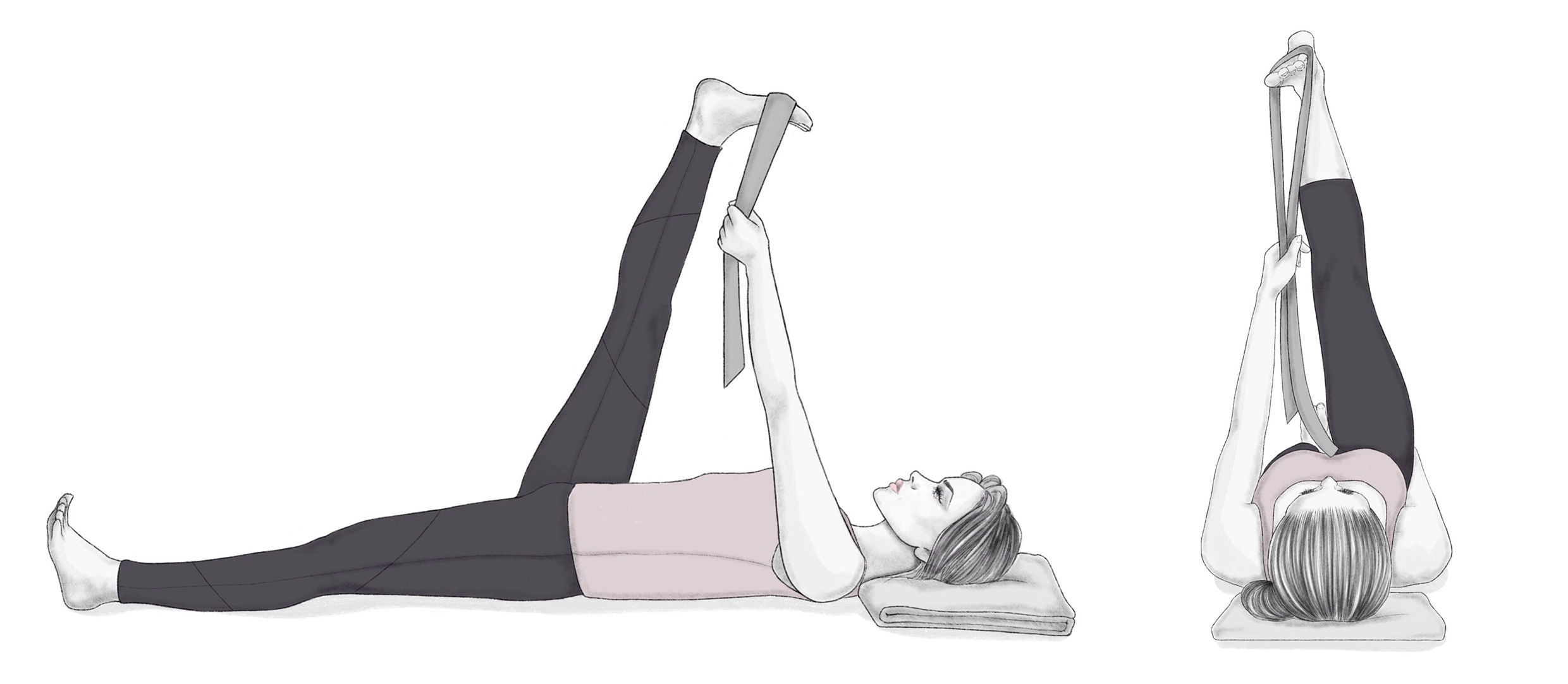
 

lateral-leg-foot-stretch

Lateral Leg Stretch

Lying on your back, fully extend your right leg into the air and keep your left leg straight on the floor. Place your right foot into a strap that does not stretch (ie. a belt or towel) and ensure that the ball of the foot is in contact with the strap. Hold the strap in your left hand then pull your toes back towards you and turn the sole of your foot inwards. You should feel the stretch along the outside of your leg and ankle. Hold for 20-30 seconds, then repeat on the left side (and switch the strap with the right hand).
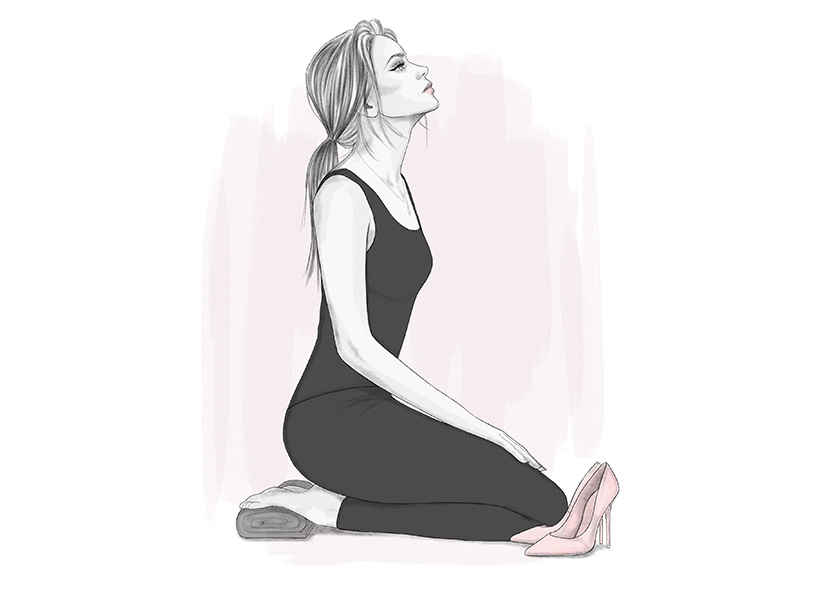
 

anterior-leg-foot-stretch

Anterior Leg Stretch

Kneeling on both knees, place a rolled up towel (or pillow) under your feet. You want the towel to sit directly below the tops of the feet and not under your ankles or shins. Gently sit back onto your heels until you feel a stretch along the front of your feet and ankles, including your shins. Hold for 20-30 seconds. If you suffer from any knee problems it is best to avoid this stretch, however if you do wish to try it do so with caution.

If you experience significant pain beyond discomfort when doing these stretches be sure to stop the activity and schedule an appointment to investigate this further.

Happy stretching!

Michelle

IPC_Discount_MailChimp_Feet_FA1


Illustrations by Sally Faye Cotterill
Shoes For Planet Earth

Integrated Podiatry Clinic is proud to be a collection point for Shoes For Planet Earth. This not-for-profit Australian charity collects good quality new and pre-loved running shoes for disadvantaged communities locally and internationally. If you wish to donate your shoes drop by the clinic and leave them with us. Your gift of a pair of shoes will change the life of a person in need!

Michelle

IPC_Discount_MailChimp_Feet_FA1

Back to School

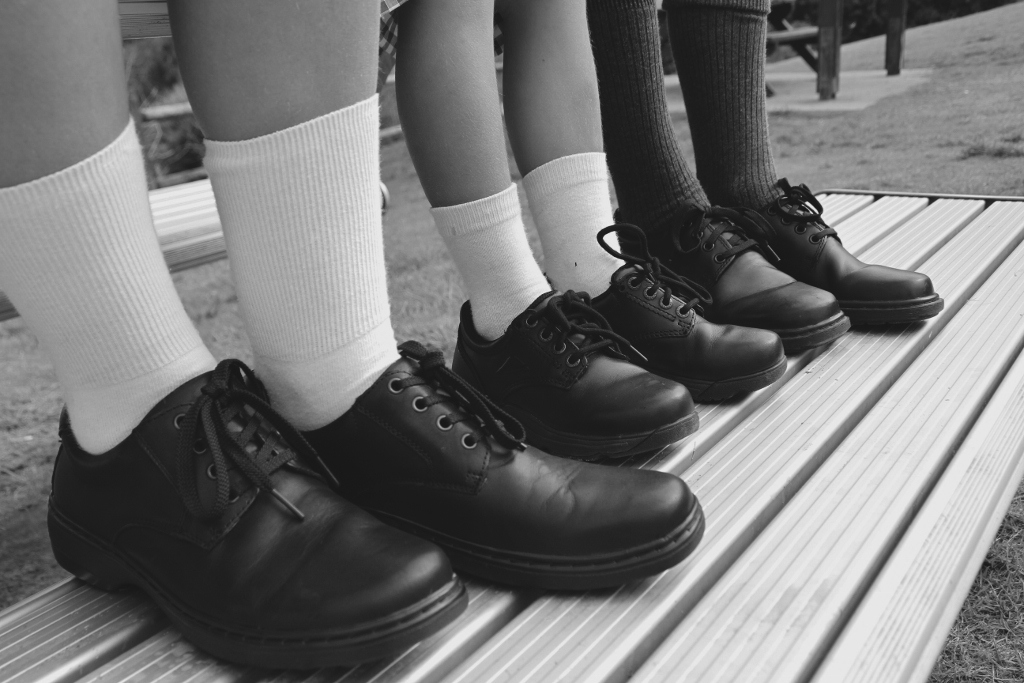
Image of school childrens' feet from The Athlete's Foot
Image by The Athlete’s Foot

Buying shoes for your child can be a challenging task, however when it comes to school shoes it is important to choose well. Children can spend up to 40 hours a week in their school shoes and it is likely they will test them out on all terrains and all activities.

During the first 12-15 years of life our feet grow very quickly and external forces such as footwear pressure shape and influence the development of the bones in our feet. It is therefore essential that when buying shoes for our children we look for shoes that will support and enhance their foot’s growth and function.

Here are some handy tips for back-to-school shoe shopping:

  • Consider size and fit. I cannot stress how important correct size and fit of shoes are for your child’s development. Have your child’s feet measured to determine their exact size. Be sure to measure both feet, as one foot can be longer and/or wider than the other. If there is a discrepancy, always choose shoes to fit the larger sized foot.
  • Ensure that there is one thumbs width between the end of their longest toe (not always the big toe) and the end of the shoe. This should be checked when your child is standing, not sitting.
  • Make sure the shoes are wide enough by checking that the widest part of the foot corresponds with the widest part of the shoe. Ensure the depth of the shoe is adequate by seeing if your child’s toes can move freely within the toe box at the front of the shoe.
  • The shoes need to have a firm heel counter – the section which wraps around the heel at the back of the shoe. Test this by pushing around the outside of the heel counter – it should be strong and stable, not fold down when pushed.
  • The shoes should only flex where the toes bend…not in half. Test this by placing the shoe in between both hands and bend each end of the shoe towards the other. Also, shoes should not twist easily when rotating the front half away from the back half of the shoe as though you are wringing out a cloth.
  • Look for shoes that have a secure fastening such as laces or Velcro and avoid slip on shoes, such as ballet flats. This will ensure a secure fit and prevent your child’s foot from overworking to hold onto the shoe.
  • Look for shoes with a leather upper as this is a breathable material and will also provide increased comfort. A non-slip sole such as rubber is also of benefit.
  • Shopping for shoes towards the end of the day is best to allow for natural swelling of the feet. Take the socks your child will be wearing with their school shoes with you to get a better fit. If your child has orthotics, be sure to also take these when trying on footwear.
  • Finally, don’t forget to ask your child if the shoes are comfortable! A well-fitted shoe should not cause blisters, discomfort or pain.

Ascent Footwear are endorsed by the Australasian Podiatry Council and are available exclusively from The Athlete’s Foot. Another trusted brand of children’s footwear is Clarks. If you would like further advice regarding your child’s feet and their footwear please contact us directly, we are more than happy to help!

Michelle

IPC_Discount_MailChimp_Feet_FA1